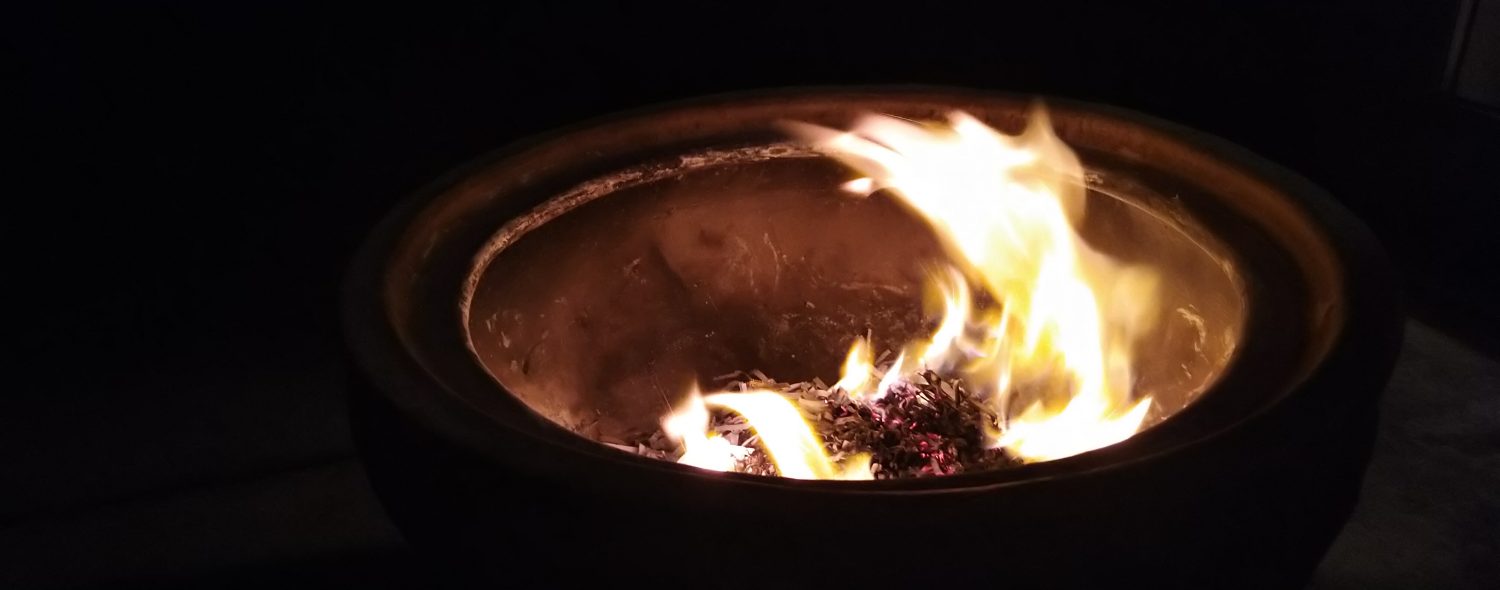
I wonder, what’s this red button do?

Recently, a friend mentioned the big red guilt button he carries on his back. I imagine this button as implanted somewhere between his shoulder blades, ready to growl an alert if, when he sits down, he relaxes, rather than answering emails or ticking off items on his To Do list; monitoring closely for movement away from responsibilities towards the committees we both serve on, and towards family time. This mention came about in a surreptitious conversation filled with me whinging us commiserating about how hard, sometimes, Quaker committee work can be (similar, I imagine, to volunteering to help with any faith group, or possibly even with any group at all). It can certainly bring with it an impressive array of opportunities for guilt. Guilt if you say no to service (we all have to do our part, you know); guilt if you say yes (particularly if you can’t, as it happens, respond to all emails within 24 hours, and all those that need careful consideration, research, and consultation more widely within 48); guilt if you say yes and you do everything “expected” of you and as a result you have no family time, no relaxing time, no personal time.*

My big red guilt button is not on my back. It’s buried deep in my more wobbly than I’d like it to be tummy. It rumbles when I eat food that will make that belly wobblier still; and it rumbles when I don’t, because what kind of example am I setting for my children if I buy into the Diet Culture? If I am not body positive, what chance do they have of overcoming societal limitations and recognising that every body is beautiful? (And yes, I do believe that – that every individual is amazing, and every body is unique and special and to be celebrated; every body except mine, that is. Oops…) I feel guilty and lazy when I choose reading over running; but how can I model living a happy life when I look upon movement merely as an unpleasant means to an impossible end, and never something to do purely for fun? Read the literature and it says, “all the studies agree that a girl’s attitude to how awesome her body is comes straight from her mother”, and oompf, there it goes again, my big red button shrieking in glee as that alarm sounds yet again.

If I manage to talk down my social conditioning, born and embedded in an era when only young, thin, non-disabled women had any worth at all; if I talk that down, it’s time for the next level of guilt to kick in. A deeper rumble now, connecting to the back of my mind. You say your body is beautiful after all? Huh! You are so wrong. And even if you’re right, none of your clothes fit. What?! You want to buy different clothes? More clothes?! But you have a wardrobe of clothes you’re too fat to fit into. A wardrobe of clothes you would have to replace. Think of the cost! Think of the environmental impact! As though eating food you don’t need – what a waste! – wasn’t bad enough, you’re now going to buy new clothes just because you’re too lazy to exercise into your old ones? Are you trying to single-handedly destroy the entire world?!?

And so it goes on. Guilt for putting work before family; and its equal and opposite guilt for not making the time during my holiday to mark the work my students need feedback from before their exams. Guilt for spending so much time prepping lessons, and not giving my colleagues enough time to adapt my lessons for their own use; guilt for not making every lesson more individual to each one of the unique individuals my students are. Guilt for choosing to spend time just with my husband and not always spending down time as a family; guilt for not supporting him more when his physical health needs it a lot more than it used to. Guilt for never putting my own needs first and then exploding when the weight of martyrdom gets too much; guilt for sitting here and writing this while my kids watch screens, the floor remains un-hoovered, dentist appointments wait yet another day to be made.

The title of this post, for any of you unfamiliar with it, comes from Dumb Ways To Die, an ad campaign that became a TikTok sensation that The Cowgirl and The Vicar both introduced me to (yep, there it goes again: guilt she knows TikTok trends already; guilt I’m not one of the cool mums who knows the trends without being told). Of all the dumb ways to die, surely suffocating under the immense weight of the guilt of everyday living has to be one of the dumbest. So many of us have one of those red buttons, buried somewhere about our persons, hidden under our shrugs and smiles and stimming fingers and falsely loud laughter. Some people reading this might even scour these words for signs that they should increase pressure on their own big red button, adding in the weight of what I may have written about them (spoiler alert: it’s not about you). So why do we still trap each other and ourselves into these needless holes we all so hate? And how can we stop being so silent about it?

https://unsplash.com/photos/selective-color-photography-of-person-holding-orange-gas-smoke-standing-on-snow-LOHVrTsdvzY

*It is a truly odd thing that a community who are, on the whole, generally quite nice people, can ask so much, of so many, for so few. I’m not sure why this is. I think it may have been this way for quite some time. I really hope it doesn’t stay this way for very much longer.

Fighting will not solve anything: a pacifist’s view of obesity

The UK Government appear to have noticed recently that there might be quite a lot of fat people in this country. This is a problem because one of the impacts obesity can have is making you more likely to suffer complications from Coronavirus. Therefore, it is now your moral duty to Lose Weight For Lizzie, England and Saint George! This sudden awakening has prompted ridicule, fear, anger, and frustration: partly because the headlines are very, very wrong; and partly because they are probably right.

Why are they wrong? The easy answer is that there is no easy answer to this complex situation. Just as there is no single way to exercise, worship God or decorate a home, there is no single reason that people are obese. There are many medications and health conditions that can result in weight gain; there are societal and cultural implications; there are lifestyle factors and financial involvement. To suggest that all of these can be overcome by stopping junk food adverts for children and providing bike maintenance is, to put it mildly, utterly missing the point. Instead, it is taking a cheap shot at a group that we as a country are already conditioned to demonise: an easy target for a quick headline, and don’t worry if it all goes wrong, it isn’t your fault these people are too lazy to help themselves.

Me on our last wedding anniversary. BMI: definitely in the red.

I am obese. I haven’t always been; for many years I was solidly overweight, unable to drop down into healthy, but equally able to keep my BMI below that scary red “you will die and it will all be your own fault” zone on the charts. I’m tall and in proportion with myself, so even health professionals didn’t always realise I had a problem. They used to look surprised and change tack abruptly when I stepped on the scales, looking slightly embarrassed and talking about the problems of “carrying a little extra” – like I’d just picked up one too many books at the library. I have most of a lifetime’s experience of hating the “little extra” I have grown used to carrying; but speaking about it as something separate to me, something inconvenient that can be put down as soon as possible and forgotten about, won’t help. These rolls of fat are as much a part of me as my greying hair, my automatic smile, my heart and my pancreas and my memories. They may stop me doing some things (fitting into old clothes and choosing the right sizes in charity shops, for example, or touching the floor instead of my toes) but so do my memories. So does my fear. So, for that matter, do my job and my family and my finances and all the other pressures that hold me here, for worse and for better.

Given all this, then, how can any of the current headlines about obesity be in any way right? Because, although the message is clumsy and temporary and turning a process of love into a glorification of violence, it is a message with truth at its heart. I do want to lead a more sustainable life, and that means changing the things that have helped to keep me, at least, obese. I don’t like buying more food than we need, and one reason for buying too much is because we are eating too much (or sometimes that we’re buying treats for our kids to get them through the craziest, scariest months of their lives so far and then eating them ourselves to get us through those crazy, scary months instead, and end up buying more). Food with fewer ingredients and less processing is in general more sustainable, likely to be produced more locally, is more linked to natural diets and more likely to keep us full for longer: better for the planet, better for our bodies, better for our minds. Making food at home and bringing it to work and picnics means less plastic, less food waste, less chocolate mysteriously finding it’s way into my shopping basket, my handbag, my bulging waistline. It’s not all about food, either. Sustainable school runs would mean scooting, cycling, starting a walking bus around our estate; not driving to school slightly over the speed limit, late and knowing that that will mean sitting in traffic as I continue on to work. Sustainable days would be activities that build relationships and boost oxytocin, having fun playing together, exploring together, working together; not only shopping, eating, watching TV together.

It sounds like a dream, doesn’t it? A lifestyle that is healthy, happy and reduces the risk of dying horribly while people explain to you how you could have avoided this if you had just taken a little more responsibility for your own choices. Why would anyone not choose that option? So why is it, then, that I, and so many like me, are still obese?

I don’t have the answers here. If I did, I’d be out there marketing how easy it is to do this: if I can, anyone can! Instead, all I can do is share the things I have learned so far. One is that blaming people who are overweight is about as helpful as a chocolate teapot, and likely to be swallowed just as easily. There are a few people who have made conscious choices to eat food that makes them fat. There aren’t many of them, and they’re not going to be paying attention to the advice given out by the government in contradiction of their life choices, so let’s not get caught up in that. Let’s assume instead that excess weight is usually the result of other influences, not a goal in itself.

Sometimes it is lack of knowledge and education. Knowing that things with high calories are bad but never having been told why can lead to choices like eating Quavers instead of nuts or unlabelled, un-traffic-lighted carrot sticks as a snack. Never having eaten freshly cooked food can mean it is overwhelming to think about cooking yourself. Local council regulations that say that a microwave is essential in a kitchen but an oven is not can prevent many people from ever having the option of eating healthy food. Educating, discussing choices, changing priorities can change these things, but they will not change everything.

Living healthy also means living slow; dreaming slow; cooking, eating, shopping slow. It means having time to plan your shopping, to cook from scratch, to eat slowly enough to know when you are full and have time to stop eating. It means having time to walk or cycle, not drive in a race to squeeze everything in. It means having time to think and reflect and reject, not just react.

Changing shape means changing priorities. It means looking at where your energies are currently pointing and being able, and willing, to change direction if you need to. It may mean putting less energy into working and less value into financial gains. It may mean laying down commitments, hobbies, roles at church or, you know, Quaker Trusteeship (looking closely in the mirror) in order to have the headspace and diary freedom to be more active. It may mean letting go of good things as well as bad. And it may be – for me, it is – that these are not sacrifices that feel right at the moment. I’ve worked hard to get my priorities where they are now, balancing self and work and family and faith. It’s a nerve-wracking balancing act as it is, and if I add anything more in, however healthy that may be, the whole crazy caboodle will come crashing down in ruins.

If we’re agreed that headline-grabbing contradictions are not going to win the good fight and free us from obesity, what will? It has to be an entire lifestyle shift. A celebration of each of us as we are, without the blame and condemnation that lead so many into disordered eating. A commitment to ourselves and our finite energy and time, that lets us say no when we can fit no more into a day, that allows decent sleep patterns and prioritising care for ourselves and for others. A commitment to model good practise in cutting off the stresses and strains of work when we need to. If the government wants to fight this, let’s see real action. Let’s see legislation that encourages employers to allow their employees to take mental health days off. Let’s see rewards in the workplace for volunteering, so that you don’t have to sacrifice yourself in order to both do good for others and earn enough money to put healthy food on the table. Let’s see town planning that builds exercise into daily tasks; that put fun into routine activities; that makes love and loyalty more rewarded than individualism and self-promotion. Let’s celebrate who we are and how we look just as we are. And you know what? When we stop interfering and just let them get on with the process of living a good life, it’s possible that our bodies will end up sorting themselves out.

A normal city street with people walking and buildings in the background. In the bottom right are two people, waiting for a bus, swinging happily on the bus stop swings.
Bus stop swings in Montreal, Canada – activity and joy in the everyday

Present absences

Thumb idly scrolling, alarm clock snoozing for the seventh time, my day is starting with a whimper and a sigh. I tell myself to move before my back locks completely, but even while I am telling myself sternly to get up and get going, I scroll on. On through posts that I ignore – plenty of them, rightly or wrongly; posts that make me laugh – sadly few of them; posts that make me angry; posts that make me hurt. There are a lot of those, and they lurk behind my eyelids for the rest of the day, popping out of my subconscious and into my internal monologues whenever I stop for long enough to take a breath.

What is it that makes me hurt? It’s not the crisis after incompetence after tragedy typhooning through the world, though that does me no credit, I know. Those are the posts that make me angry, and my responses are either avoidance or self-destruction, as they consume my mind in a blinding supernova of rage. No, the things that make me hurt are the day by day moments that are so much more creative, more joyful, more full than my days are. Is it jealousy? Probably, in part, if jealousy starts with your throat and your eyes and your hope and moves on to your tummy, inching its way by repetition to your heart. I know those are the good moments, the islands in the storm for others, just as they are when I post the same. And yet, that litany of pictures, of family adventures, positive Lockdowns, weight loss, planning a holiday, making a difference, speaking out, being brave, achieving goals, taking a risk and getting it wrong, and just plain living – that cumulative scrolling makes my heart ache and saps my will.

This is not a post bewailing social media. Of course people should share their joys, their sorrows, their hopes and failures, if that is what they want to do. Indeed, for those of us who are congenitally incapable of maintaining relationships over a distance, Facebook is a marvel and a delight for much of the time. But when the presence of something is an expected norm, unquestioned and unquestioning, how do you share its absence?

I was one of the first in my friendship group to have children, so I won’t speak like I’m an authority on what it feels like to have none when your body and your mind and your soul are tearing you apart with longing. People I love have shared their experiences with me – of the fear and the pain and the praying, the debt and the hope and the impossible choices, but it is not something I can directly speak to. At the other end of life’s glorious spectrum, I have lost a parent when most of my peers were still living with theirs. I know that moment of jarring reminder when someone asks “Where do your parents live?” I have seen the dawning horror on their faces as the conversation progresses. I answer about my Mum, and they ask whether Dad will be joining us too.* Now my Dad died many years ago, so, although it still makes me sad to think of all he is missing and of all the things I can’t share with him, mention of those things no longer makes me cry. So if I’m asked, I answer the question. To be honest, I usually answer it bluntly. And then the person I am speaking to is left with no idea, at all, of what to say next. Because how do you respond when someone tells you that they are outside the box you expect them to be in and, no matter how much you want them to, they will never go quietly back to being normal?

Normal. Isn’t that an awful term? As though there is something we all started out as, and any deviation from that is somehow an error. But if normal is white, cis-gender, heterosexual, in a stable relationship, with children, able-bodied and neurotypical, with no mental health concerns and no traumatic events in their past – if that is normal, then normal is an awfully small collective. And where does that leave the rest of us?

It leaves us living with absence. It may be small. It may be life-changing or hope-destroying. It may be dictated by circumstances or forced upon you by another’s actions. But let’s not forget that it may also be a blindingly positive, proactive choice. How do you celebrate small, with the things you did not buy, the waste you did not create, the plastic you did not use? Or celebrate big, with the choices you made to not follow that expected path and the joys it has given you in the execution of your own vision? Living a more sustainable life, materially and emotionally, is as much about positive absences as it is about the presence of future-looking actions. It is about the counter-cultural refusal to cash into a society that tells you that the way to protect our communities is to buy and to fly and to keep on moving, spending, updating. It is the rejection of the message that if you buy this or avoid eating that or go there, you will be full and have no absences, because they are bad and must always be hidden from view. 

Epidauros II by Barbara Hepworth. Negative space can be extraordinarily beautiful.

Absence is as real as presence in our lives. Sometimes it is more real than the furniture around us and the lives outside our windows that all look so very, very different to our own. It can be a fury-filled growl of silence and frustration; a blank canvas of waiting for something to happen; an exciting and life-giving explosion of self over expectation. If we could share those moments of absence without fear, or pain, or judgement, or apology; if we knew the whole of our selves could be seen, how could the world not be a better place?

*As a side note, please don’t do that. Don’t repeat language someone else has changed. It wasn’t an accident. They heard what you said and they changed it deliberately. If you ask about someone’s wife and in their response they use the word partner, or husband, or reply about themselves in the singular, that’s what you need to use too for the rest of your conversation.

A delicious minefield

I have just completed the first big food shop since before Christmas, much to the relief of the entire family. This means that we should no longer be forced to eat pasta with a sauce spiced up with leftover salsa in an attempt to put the shopping off for as long as possible use up all our leftovers.

My shopping basket was about as stereotypical as it is possible to be in January, apart from the fact that it did not contain celery. It was filled with fresh vegetables, supplemented with whole-wheat pasta, and contained no alcohol or caffeine – though that’s mostly because we topped those up a lot more recently than Christmas.

As someone with a minor obsession with list-making, I plan the food shopping in our household, mapping out what we are going to eat through the week, and buying the ingredients accordingly. Like drinking black coffee, it’s a habit I’ve carried over from my student days, when £10 had to feed me for the week. Any number of websites will tell you that doing this will help you to cut down on your food waste and the amount you spend on shopping. I wish they could see our fridge at the end of a bad week, is all I can say.

Food has to be one of the most complex minefields in today’s society, knocking me sideways every time I sit down to plan a meal. If it contains nutrients of any description, and any form of protein other than chicken nuggets, The Paleontologist is likely to gag over it and eat no more than three mouthfuls. On the other hand, if it has cheese or some form of carbohydrates, The Cowgirl will eat it until she makes herself sick (I really wish I was speaking metaphorically there…) Trying to be more conscious of food waste and the energy used in food production means I want to cook food that will be eaten, and give us all the energy we need for the day, but also that I don’t want too much instant food. On the other hand, after a day of teaching with lunch shovelled down at my desk, I need meals that can be cooked in half an hour or less. I would love to eat more plant-based proteins, but I’m married to someone who will only eat lentils if they are heavily disguised, preferably as a steak.

As if that wasn’t enough, you then get into the dilemmas of trying to raise body positive girls. Reducing our impact on the climate means eating more local, unprocessed food, and not wasting it by throwing half of it away at the end of the meal. So I find myself encouraging The Paleontologist to eat – and then remembering I promised myself to never tell my children that they have to clear their plates, or use pudding as bribery, as that can lead them to being unable to tell whether they are full for themselves or not. What happens if she is actually full, and I’m making her overeat? But what if she isn’t, she’s just being fussy, and I’m wasting food by throwing it away? Add into all of this the fact that I am, as one observer put it, of “Traditional Build”, and the dilemmas increase. I have spent my lifetime disappointed by my physical appearance; hang-ups I am struggling not to pass on to my children. I don’t want them feeling that dieting is something you have to do, as a woman, to fit in with society. But they’re already taking selfies better than I can (The Paleontologist has the pout down perfectly) and I didn’t teach her that – I don’t know how to do it myself. So how much control do I have over any of this anyway?

What is the solution to all of this? How can you balance the messages about the risk of obesity with wanting children who are body confident? How do you balance teaching them to listen to their own appetites and the needs of their bodies with reducing food waste – including that wasted by eating it when we don’t need to? And how do you do it all whilst knowing that at least once a week, the food plan will go out the window and you’ll be doing chicken nuggets and chips, as that is, despite all the careful planning, all you actually have the energy for?

So far, the best I’ve come up with is to muddle through with a mish-mash of every theory in moderation – which is, incidentally, my approach to every other parenting choice too. There are times I encourage them to eat, and times I encourage them to stop. We talk about food waste, and listening to our own bodies. We talk about eating because it’s habit (yes, even The Cowgirl is old enough to be doing that already) and knowing when to stop. We talk about the kinds of food you need to make you big and strong and fast and help your brain to work, and we pig out on chocolate in front of a film when that’s all any of us are up to. It’s not the best of any solution, but for now, we seem to be muddling through. If you have any better ideas, though, I would love to hear them!

art broken explosion glass
Photo by Stokpic on Pexels.com