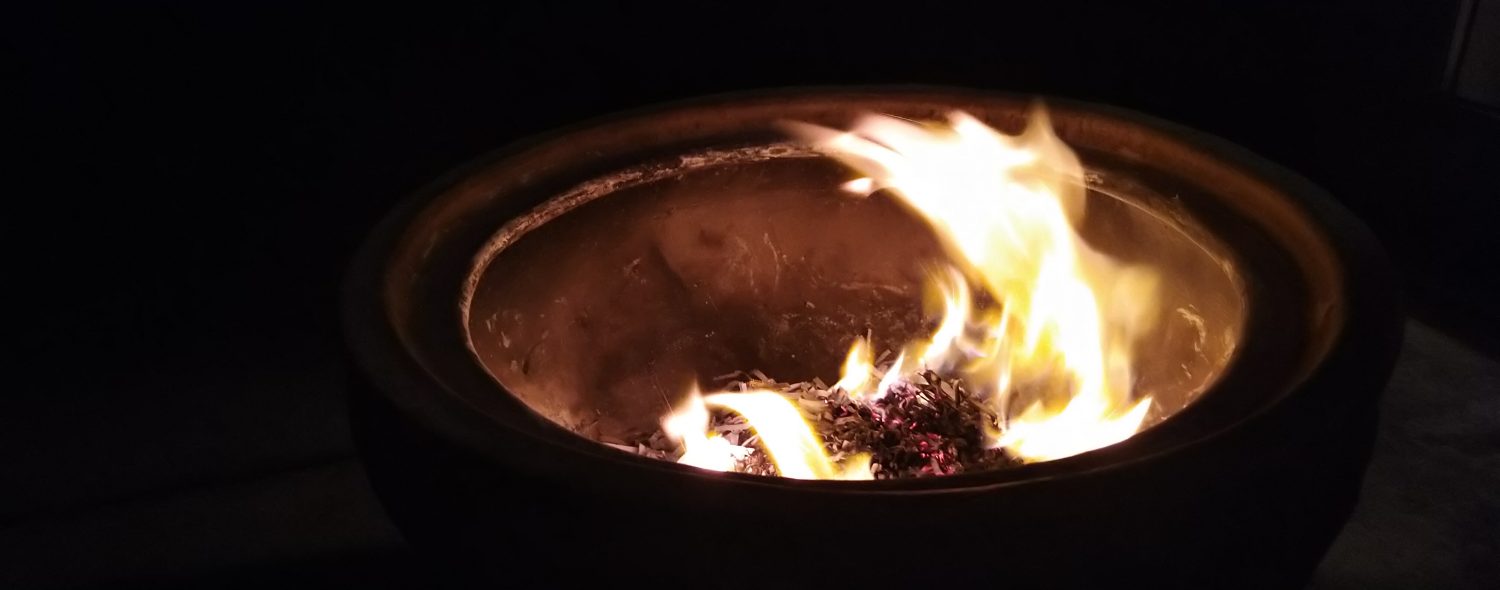
Busy doing nothing: the first 5 days.

Day 1. The Cowgirl comes in at 6:30am (second time that night) with an ouchy tummy. My sleep-fogged brain finally puts together all the pieces and we work out this is an all-too-familiar list of events, which results in a call to the doctor and antibiotics for a urine infection. Normally this means a day of Netflix, sleep and Calpol, and then back to normal. Today it resulted in a text message by 8:30am reminding us that, because urine infections come with a fever, the family is officially locked in for 14 days.

First I refused to believe it, running through everything I wanted to get done before this happened. Then came relief: at least now we knew what the next 14 days had in store. That was closely followed by guilt and a morning spent in Skype, email and Google Classroom as I watched my colleagues trying to plug holes and fight fires as we locked down the college for the academic year, with no exams complete and no certainty of whether this is entirely practicable or a massive over-reaction.

By lunchtime, we can breathe again. Calls have slowed, children have settled, antibiotics have been fetched. We have more food in the house than we had at Christmas, nothing has run out yet, and there are flowers and sunshine.

The evening arrives and I’m buzzing. Life is good and so are the people around us. My colleagues have delivered my left-behind marking; The Vicar’s colleagues have delivered the most beautiful duck eggs you’ve ever seen, and soil-encrusted potatoes from the local market. The paramedics have also revised their opinion: with The Cowgirl responding as expected to antibiotics and given The Vicar’s key-worker status we are given the all clear for him to leave the house if necessary. We are good.

Home working meets home schooling meets our kitchen table, clear for the first time since… well, possibly since we moved in.

Day 2. Can it really only be day 2? This time last week everything was still pretty much normal. How can things possibly change this much in a week? Within the house, life is manageable, apart from occasional gripes when told that we can’t use the playground and a moderate panic from me until I work out that what sounded like dry coughing from the living room was actually just The Paleontologist putting lanterns into her Minecraft mansion. Seriously – who knew the two things could sound so alike? Outside The World’s wheels continue to turn. Fears abound and people continue to behave like idiots. But self-isolation works both ways, and we are as isolated from that as others are from our temperatures.

Rainbow crystals take 1. These followed the recipe. The others did not. They are not quite so pretty…

Day 3. It’s Mothering Sunday. Church and Meeting are in enforced lockdown; we join Zoom so that we can take part in Meeting, catch up on worship on Facebook Live, and take the timer off Facebook so that it stops telling me this is contradicting my digital wellbeing. The sun is shining; the blossom is blooming; The Cowgirl is experimenting with endless rainbow crystal test tubes. All around us people are struggling and suffering and stressed and I am feeling pretty guilty that I am not.

My students have told me before that it is only in England that the work-life balance is so bad that you cannot shop for fresh produce every day. What habits will we all form in this time of enforced idleness? And will we want to return to our great busyness when society returns to normal? There are times that it feels like this is a giant reboot, turning society off and on again. I am aware that there will be many who are unable to trust that this is an answer to prayer. I am aware that there will be times when I cannot feel that myself, and I am aware that I am very lucky that right now isn’t one of them. But we have been praying for years for something to disrupt the destructive, cataclysmic societal structures that are draining the lifeblood of existence on earth. Prayers are very rarely answered exactly how we would like them to be. Is it just possible that this time, they are being answered like this?

Mothering Sunday flowers. I present to you the New Normal.

Day 4. It’s Monday. Schools are shut and we’re juggling children’s activities with trying to maintain a normal work timetable. This is not going well. The morning was pretty productive and the children were cheerful. The afternoon was productive in a very different way: mostly productive of tears. And screaming. And The Paleontologist pretending she’s 15 and storming off to her room, slamming every door along the way. 8:30pm brings the news of Shutdown 2.0 from Boris Johnson, and the day ends with whiskey and chocolate on the sofa. The Vicar’s phone pings continuously from those who can no longer look to any form of church to sustain them when they need it most. His face greys out as the evening progresses and he gives all he doesn’t have while mourning himself for what has been ripped away from the core of his being. There are many who are screaming tonight, as the candles, lit at 7 to show hope, are blown out one by one.

Our joint plan for avoiding going stir-crazy. And to stop me spending all day hiding away with nothing but a bottle of gin and my phone.

Day 5. The cracks are deepening and blood is starting to seep through. There have been tears, tantrums and misunderstandings galore. The kids haven’t been coping brilliantly, either. Things ease once the morning chaos is past, though – the sunshine continues to help us out massively, a local independent bakery are doing home deliveries of chocolate brownies, and school have sent out colouring activities instead of research tasks this morning. This too will pass. All will be well.

As close as we can get to holy ground, in The Room Formerly Known As The Dumping Ground.

Smiling, Spring and Coronavirus: keeping pandemonium in perspective

Spring landed this morning. The sky was endlessly, brilliantly, blue, bigger and brighter than it has been for months. The grass was uncomfortably luminous, real life filters making it too bright for eyes used to winter dullness. The glorious yellow of the blooming daffodils was matched only by the golden arms of the JCBs, carving out new foundations next to still-waterlogged floodplains. Blossom, too heavy now to be contained in scent-stuffed blisters, burst forth in transitory wonder. And driving through this cacophony of new life, my heart is crashing and my tummy is exploding with tension; a volcano transforming my focus and sapping my mind.

We all live in bubbles. Most of the time, we ignore their presence, looking out through their soapy rainbow walls at a world filtered for us by our own prejudices, seeing everything as though it fits perfectly with our own expectations. But every now and again – in elections, in pandemics, when meeting the family of a new and beloved partner – bubbles crash into each other and can no longer remain invisible. At these crunch points, we have a choice. Do we stay within our bubbles, shoring up the walls and hoping it will be enough to keep out the threat creeping towards us? Do we attempt to burst the opposing force in order to maintain our own security? Do we create a double bubble, the sides gelled together, though each remains integral to itself?

The thing that is most exhausting for me in this time of fear-fuelled headlines and anxiety-provoking bulk emails are the bridges between my bubbles. I have one for home, another for work. One for Quaker Meeting, and an adjacent one, sometimes attached, sometimes a lifetime apart, for Church. I carry these identities within me all the time, and the nothing moments, when I switch from teacher to mother, from daughter to counsellor, from worshipper to Vicar’s Wife, are always the points of my day when surges of energy rush me with adrenaline and exhaust me from my painted toenails through to my split ends. In normal times it can be overwhelming; and these, of course, are not normal times.

Keep calm and carry on is engrained – after all, we don’t want to make a fuss over nothing. Have a cup of tea and let everyone else whip themselves into a flap clashes in mid-thought with memories of those around me I know are immunocompromised, or over 70, or pregnant. My natural instinct to be a raging hypochondriac sits in chattering conflict with my deep-seated need to write off as suspect anything promoted by Boris Johnson. Wanting to do my job and do the best I can by my students, labouring over planning and guiding and marking and feeding back, is suddenly the worst thing I can do, and to help them the most I need to leave them alone. Together we learn the new language of self-isolation and social distancing, too new still to come up on the spellcheck. Every day I hear new myths, covering racism, justifying prejudice, anticipating financial hardship. All of it is based on fear masquerading as fact. All of it is spoken with authority and without understanding.

The world, for many, has been flipped inside out, and I feel buffeted along with it. If we cannot trust each other enough to not hoard toilet paper, how will we get through this together? (I was sitting smug on this one until it occured to me that our upcoming delivery from Who Gives A Crap will be sitting outside our front door all day, if it’s delivered at all. I never worried about other people walking off with it before – after all, it’s a box big enough for The Cowgirl to turn into a café, filled with nothing but toilet roll. All of a sudden, I feel a bit like I’m leaving gold dust in the front garden all day…) I won’t finish with advice I’m not sure I can follow either. Instead, I will share the three things I have learned today, and let tomorrow take care of itself.

  1. Don’t be like me. Be like The Vicar.* When the news updated us to leave the house only for essentials and work, I bought vegetables and withdrew cash. He bought a case of wine and visited the sick in hospital. It’s all about priorities.
  2. Don’t sing Happy Birthday. Unless it is your birthday, of course, at which point, indulge as much as you can in the singing, as now is not a good time for parties. Instead of singing, say the Lord’s Prayer. I have found little that helps me slow down, be mindful, and hope, as much as that.
  3. Stop. Talk. Share idiotic stories – from a distance of 2 metres, naturally. My introverted nature is close to dancing for joy at the idea of having a legitimate reason to enforce personal space, but even I’ve been talking to people that I would normally just smile at and move on. This is a time when we need every connection we can make, and actually, it’s lead to some great conversations. And the discovery that security tagging Extra Mature Cheddar is a thing. But mostly, it’s made me smile, and I for one needed more of that.
A screen filled with white and blushing pink blossom.

*I decided my husband needs a name on here, rather than just being defined by his relationship with me. After all, I’m very aware how frustrating that can be. I’m going to get in trouble for this name, as it isn’t technically his current job title. But hey, this is my blog, so I’ll stay a Vicar’s Wife, and he will stay The Vicar.

What the hell are we doing here?

I have steered clear of talking about politics here. Well, a bit, anyway. This is partly because simplicity is the polar opposite of any form of current affairs (though messy has certainly come into its own), and partly because when I think about politics at the moment it gives me that clenched up feeling in your throat that you get when you’re arguing about something you really care about with someone who just won’t listen.

This morning, I accepted that I couldn’t ignore that lump in my throat and keep on trying to breathe through it. Why? Because the start of the teaching year is just around the corner, and so, possibly/probably/definitely/never in a million years (delete as appropriate) is a General Election.

A mobile polling station in an area with no community buildings. With nicer weather than the next election, I suspect.

As anyone who has ever been in a classroom with me for more than 10 minutes will know, I quite like talking about politics. In fact, make that anyone who has spent 10 minutes with me in any situation at all. (Overhead yesterday was The Cowgirl, the roll of her eyes evident through her voice, muttering “Not boring Brexit again…” Sometimes struggles to work out which way round her trousers go, but already knows about Europe.) We have discussed Brexit, immigration, budgets, whether education should be free, climate change, the NHS, and so many other things besides. Sometimes they come up naturally. Sometimes they are shoe-horned in to tick a box (you want me to talk more about British Values? Well…) Sometimes they are deliberately planned because I think it really is so much more important than a bit more on how to pass an exam.

One thing that falls clearly into that category is teaching students about elections. I first taught a lesson about voting back in my first year as a trainee teacher, and agonised over it for hours. I have honed it, shaped it, vastly improved it, and used it again for every election since. I teach adults. They need to know not only that they can vote, but how voting works, and how to choose who to vote for.

And that is the key problem I am having now. The first part of the lesson is very straightforward. Take my usual rant about why everyone should vote, tone it down, remember not to do it with a large glass of gin in one hand, tone it down again, and job done. Then things get harder. Normally, at this point, I would go into a variety of things that should probably be obvious, but, apparently, are not. My students leave either bored out of their minds or fired up with new-found enthusiasm, and I can sit back and know I have done my bit for democracy, compose Facebook updates detailing the most interesting things to come out of the lessons, and feel delightfully smug.

Not this time, I suspect. My usual list of What Students Probably Don’t Know runs into neck-deep quicksand by about minute ten:

  • You do not vote for a party; you vote for a candidate. Well, I suppose that is still true. More so than normal if yours is one of the more than 30 MPs to have changed party this year. (I admit, that figure is based on Wikipedia, which lists every shift in allegiance, expulsion due to scandal and bigotry, re-admission, and re-expulsion in dizzying detail.)
  • We do not elect our Prime Minister. So far, so accurate, of course. This has caused seismic incredulity every time, even in the days when we had a conventinal Prime Minister. The obvious question is always How are they chosen then? Um. He’s the one who can command a majority? On the day even his brother abandoned his party, I don’t think that works. He’s the leader of the largest party? By this time next week I’m half expecting the Tories to have been overtaken in number by the Lib Dems. He’s the one who has the confidence of the House? When it is both publicly acceptable and not even questioned to say that Boris Johnson will change his mind as soon as it suits him, I doubt he has the confidence of his own reflection, never mind Parliament. Well, never mind. We always knew Boris would break the mold. Let’s move on.
  • Choose who you will vote for by what matters most to you. In a world with so many demands crushing in from every direction, who is going to be our R2D2 and stop the walls before they kill us? Climate catastrophe lurks in every shadow, questioning every choice available. The NHS is in crisis. Education is making our children less equipped for daily life as it overwhelms their resilience and their ability to make independent choices. Brexit hovers over us like that spaceship in Independence Day, and none of us really know which worldwide icon it will consume next. Given all these paralysing priorities, I’m not convinced it’s fair to put anyone in the position where they have to decide on the spot what is most important to their lives. I certainly can’t ask them to defend their choices to people they have only just met.
  • Find out what each party stands for. Quakers seek that of God in every individual; here, I seek that of God in every party. I have to provide materials on each one for my students, as none of the parties produce their manifestos in a way that can be understood by low-level readers who are also politically inexperienced.* I attempt to read them, summarise them without bias, make up my own too. It does, however, require manifestos. Or at least, it requires people to say things and then stick to them for at least as long as it takes to teach one lesson. This taxes my time, my neutrality and my patience with current affairs at the best of times. These are not the best of times.

It feels more important than ever to teach about the next election, precisely because it is so unpredictable, so unusual, so contradictory. We need to teach each other, our children, ourselves. We all bear responsibility for getting into the unfathomable fiasco facing us now. What do we do now to take responsibility to get out of it again?

Thunderstorm, courtesy of Pixabay. Amazing colours surround us as nature crashes down on our heads. https://pixabay.com/images/id-3440450/

*You can get easy read versions, but they still run to about 50 pages and tend to be even more biased than the standard ones. She says, with no bitterness at all.

Everything is connected

One of my all-time favourite films is V For Vendetta. Apart from the obvious moments (after all, right now, is there anyone who would object to Westminster being blown sky high, particularly if empty at the time…) one scene that really resonates is a montage where investigator Eric Finch says “I suddenly had this feeling that everything was connected. It’s like I could see the whole thing, one long chain of events… It was like a perfect pattern, laid out in front of me. And I realised we’re all part of it, and all trapped by it.” His companion, of course, asks if that meant he knew what would happen next, and with typical bluntness gets the response “No, it was a feeling. But I can guess…” And tragedy plays out, giving the film the chance to leave those horrors in maybe-land: did they happen? Did they not? Can the girl with glasses be saved?

“V for Vendetta” by Marko Manev is licensed under CC BY-NC-ND 4.0

We live in a time when every problem is treated as though it stands alone, and every individual is trained to see themselves as an island, with, if they are lucky, causeways connecting them to others, appearing and disappearing with the tides, with never a hint of where the mainland might be found. If you are ill, you get tablets. Tablets for blood pressure; for cholesterol; for headaches; for coughs, colds and not being quite at your best; for anxiety; for depression. Tablets for each individual symptom, as though all of these things are somehow caused separately, interacting independently with the body they have found a home in. Sorting out your work-life balance is a task for every individual, who is then held personally to blame if we get lost in the middle of a perfect storm of demands and expectations and can’t do it by ourselves. Saving the world means cutting your personal carbon footprint, giving up plastic around the home, individual action and sacrifice. The question is always: what are you doing? You as an individual; a family household; maybe, at best, as a town.

Seeing individuals as worthy of value and respect, with God dwelling within them, whatever they have done or thought, however they look and regardless of the capacity for good or evil weighing down their actions, is a gift and a curse and a thing we should all be aiming for. Seeing the individual as the height of all our ambitions, personal glory over a community rising together, has caused lives to fall apart, an ever-widening gap between the rich and the desperate, and Boris Johnson moving into number 10. How much further does this road have left before it splits into so many individual footpaths, some smooth and wide, some rocky and overgrown with nettles, but all leading inexorably into the wilderness of isolation, getting further and further apart, until we can no longer see, smell, hear, any other living things around us?

Talking to students has made me realise how unhealthy expectations in this country can be. One told me that she works so hard that she buys clothes and doesn’t have the time or the energy to wear them. They lie in the bags they came in at the bottom of the wardrobe until, packing for an extended journey home, they resurface, bringing with them the hope they first entered the home with; hope that will now be enjoyed elsewhere, because there is no time for it here. It is so different, she said, in the country she was born in. People there value and enjoy their possessions, their friends, their time. For someone who barely has the energy to brush her teeth at the end of some days, I confess, that sounds like an idyll beyond price.

How have we come to value ourselves and each other so little? Why do we value money so much more than time? During my first year as a teacher, I got used to a day that left the house running for school at 8am and didn’t finish until the next day’s lessons were just about thrown together, usually at about 11pm. I put up with the hours, the expectations, the lack of any life outside the walls I had prepared for myself. I boasted about how bad it was, as we outdid each other with stress levels and caffeine intake around the staff room kettle. But why? The expectation is that in order to have a job with meaning, with satisfaction, that changes things, however small, you put up with what is thrown at you. And acting alone, my choices are suck it up or sack it off, give up, do something else. But what if we all stood together? Not just my union (though we are working on that one); not just those working in the public services; all of us, walking together saying we, and our lives, and the planet are all worth more than mindless, individual busyness?

More time means more ability to slow down, to make from scratch, to take care and do, buy, say the right thing, not the easy thing. To have a sense of achievement from that. To tell someone else about it, and work together so that they can do it too. More life in that notorious balance means more opportunities for joy. And more joy means less greed; less need for eternal, all-consuming growth; more options.

Living within our means is a phrase that has been used for the good, the bad, and the blatantly discriminatory within society over the last decade or so. But when it is used, it is always used to talk about living within our financial means. What would it be like to live within all our means? To live lives where we use the time, the emotion, the energy we have to live our best lives; where nothing is asked of us that we cannot freely give? What would it be like to be able to look ourselves in the mirror and know that we are enough?

It is the summer holidays: traditionally the point that teachers look at their lives and try and sort out all their problems at once, now that they suddenly have space to breathe. I find myself looking at the chaos I create around myself and wondering what we would have to do as a family to live within our time-means. What would we as a country have to change in order to do the same?

When grief and guilt collide

This is a bit of a secret, but here goes: I can never hear “Let It Go” without smiling. There are reasons, I promise. (Admittedly, I like a lot of other songs without the reasons, but some things are meant to stay secret…)

When Frozen was the new big thing, The Paleontologist was still at nursery, and only knew the names of about 3 dinosaurs. Picking her up each lunchtime, we often found ourselves walking home with another little girl and, as often happens, the two became fast friends. It would take us twice as long to walk home, of course, but it was worth it for the company, for the grown ups as much as the small people. As we walked, we discussed everything from religion to the trials and tribulations of having little girls with ridiculously curly hair. It was mundane, often slightly stormy, and utterly lovely. A few journeys home stand out particularly clearly in my mind. One was the walk where we spoke of my friend’s family for the first time. She was from Yemen, and these were the days before the war there was particularly spoken about. It was from her that I heard about the conflict, and her who told me the story of a nephew of hers, lost in the fighting. She never said what side he fought on, and I saw no reason to ask. She did tell me his last action was to call his mother, pray for her, and tell her he couldn’t get out. She stayed on the phone until the line went dead.

Image by Sarah MacIntyre, published on Twitter in response to the attack on the Charlie Hebdo building in January 2015. A beautiful picture of two young girls, one in a hijab, one with uncovered hair, weeping as they draw a heart between them.

My other memory is made more beautiful by the tragedy that walked with us at times. The Friend could barely speak English, growing up as she had in a bilingual household that spoke Arabic at home. The Paleontologist had never seen Frozen, or listened to any of the songs. But there they were, skipping down a backstreet, dodging dog poo and abandoned tyres, and belting this song out at the top of their voices, The Friend singing, The Paleontologist echoing. It remained their song until they left nursery to go their separate ways, to different schools and, soon enough, to different cities. In my mind, it will always be their song.

At this point in the academic year, Let It Go becomes a bit of an anthem. That and The Final Countdown. There are a lot of reasons for this, to say the least. Mistakes are always made, by teachers, by students, by other departments who frankly should know better. The time to sort them out has passed and we are left with no choice but to accept whatever outcome we are left with. Students who have failed who deserve to pass; students who have passed who did no work at all; students who have faced circumstances that mean they have dropped out, at the last minute quite often, because of exam terror, or sudden eviction, or losing their Home Office appeal and facing deportation. And we, their teachers, are left saying goodbye, looking at a year of slogging our guts out, summarised in a row of 50 or so little words: Pass. Fail. Pass. Pass. Fail. For me, at least, those words are filled with emotion. Grief for the things I planned to do, but didn’t quite manage in the heat of yet another Ofsted year. Guilt for the times I wasn’t focused enough, didn’t get that marking back with enough feedback; would that have made the difference? Grief because, for all it is an overwhelming relief when the end of the year finally comes around, it is also a goodbye, to the groups you have really enjoyed as much as the ones you have struggled with, and I have never been any good at goodbyes.

Loss. Goodbyes. They always seem to be bad things, to be avoided at all costs with Hollywood-style endings and Olaf having “his own personal flurry”. None of the heartbreak of The Snowman for younger generations, please. And don’t get me wrong, I’m all in favour of happy endings. There is a reason I’ve never made it to the end of Watership Down. But we know that growth, beauty, fulfilment can only happen if some things are lost. The more you prune roses, the more will grow in future. (I think, anyway; though if I’m wrong that explains why my roses keep dying…) Students must finish with us to leave and move on in their lives and achieve whatever they are able to. Children must grow up, grow independent, make choices and mess things up for themselves. Loss surrounds us, from monumental landslides that make life after them unimaginable, through to little disappointments, more hurt pride than moments to mourn. Beautiful moments you don’t want to let go of. Moments that went wrong, and leaving you grieving for what you hoped they would be. Every breath draws in new life and releases what is no longer helpful. Accepting those losses is the only way to release the weight of carrying the world on your shoulders, eternally. But isn’t that so much easier said than done?

How can you accept your children no longer seeing you as the most magical person to ever exist? How can you accept students who once saw you as their salvation seeing you now as the teacher who let them down? How can you accept the passage of time robbing you of health, energy, self identity? How can you accept a political situation that fills you with fear of what may be lost, and anger at the price that will have to be paid by those who have nothing to pay it with? How can you accept the loss of your parents, your partner, your siblings, your children? Grief never disappears. It sneaks into your gut when your shields are down, when you sleep and dream they are still alive, still around, that you are still able to change and correct the situation. And resting underneath the grief, gurgling maliciously, is guilt. Have you let them down? Could you have done more? Do they know you could, should, tried to do more to change things? And then that guilt surges to the surface, forming a suffocating barrier between yourself and acceptance.

Making a choice means closing down opportunities and saying no. If you commit to one course of action you are saying no to all the others. Sometimes it is just a delay, a maybe next time, or an I’ll try that when this other thing changes. But sometimes the choice is absolute. The choice to move countries; the choice to have children; the choice to get married, or to get divorced. Some decisions will forever change the direction your life will take, and you will never be the same person as you were before you made them.

But when we make these big life choices, we rarely pause to grieve for the things we are leaving behind, even as we celebrate the things we are moving towards. Nor do we acknowledge the guilt that can be associated with those choices. Getting married will always be a point where everything changes, and I added to that by moving halfway up the country at the same time. Oops… And then my father died, 3 months after my wedding. Publicly celebrating our intention to support, aggravate, annoy and enhance each other for the rest of our lives was utterly beautiful, and I will never again have a party that is so much fun. But it meant I was giving up my father’s name, changing documents so that he was no longer an explicit part of my identity, as he lay dying (even though we didn’t know that was what was happening). But I had just got married! How could I feel guilt, feel grief, for that? But seriously, looking back, how could I not feel All The Emotions at such a time?

You can have anything. You can’t have everything. And admitting that, whilst being one of the hardest things ever to do, is almost certainly key to surviving everything else, acknowledging the grief, the guilt, and moving beyond both into genuine acceptance.

Poppies at sunset. Image by danigeza, via Pixabay.

An Ode to Further Education: the good, the bad, and the utterly impossible

21st century life makes it very easy for us to make bubbles around ourselves without even realising it. Facebook shows us posts we are already likely to agree with. We make time to talk to the people whose views make us happy, and the others fall by the wayside – something that is all to easy without ever noticing in the crazy busyness of life.

Bursting that bubble means leaving that comfort zone a little bit. Doesn’t have to be far. Church is one way of doing that, as you worship together next to people of different ages, languages, life experiences. Further Education is another way. You walk into a classroom intending to improve your maths, and you find yourself sitting next to someone with a swastika tattooed on his arm. Or someone who voted Remain when you voted Leave. Or someone passionate about averting climate disaster when you think the whole thing is depressingly talked about too much already, and really, what does it have to do with you?

Being a Further Education teacher hasn’t just burst the bubble I live in. It’s sent it spiralling into the nether regions of outer space. It’s changed a lot of other things about me too, of course – I used to have less grey hair, a recognisable waistline, and the ability to stay awake past 9pm, for starters. But balancing out all those things is the moment you get it right, find the right question, and everyone in the room learns something they used to disagree with.

The class you end up in within adult education is not based on age, and is not always based on previous education level. If I’m honest, quite often occasionally it’s impossible to find any logic in it at all, however hard we all try. Fully qualified and experienced nurses from other countries can be in the same classroom as people who could never progress at school because dyslexia was not a recognised thing 50 years ago, and they were just called stupid and put in a corner. They are joined by those sent by the job centre to demonstrate they are improving their employability skills, who sit next to those whose English needs improvement and who can’t afford the time and money needed for an ESOL (English as a Second or Other Language) course.

An adult education classroom, for those who have never entered one, is a place frankly unlike anything else in this world. It is populated with a cast that soap operas would reject as being too extreme to be believable. As a teacher of Functional English and Maths, I think we see both the absolute best and the diabolically appalling depths of humanity, often on the same day. In my classroom, I have had refugees from Sudan and asylum seekers from Syria. I have had drug dealers and people who will do anything to cheat the benefits system. I have had women who have picked up their children, whilst still teenagers themselves, and moved to a whole new country to avoid domestic abuse. I have had men who were knocked down by cars or circumstances as children, and became unable to recognise words like “and” or “me”. I have seen hundreds of adults walk through the door with a driving ambition to be midwives and paramedics, human rights lawyers and politicians, to learn to read their children bedtime stories or fill in a form at the doctor’s without asking for help, to make their children, their spouses, their parents, finally, proud of them.

There are as many starting points as there are different ways of spelling the sounds we use in English. (If that’s too technical, make a guess of how many it is. Double it. Add another ten. Then double that if you want to include the ones that logically we should use, but we don’t.)* They all want different things at the end, too. The thing is, they have all chosen to walk back into education for their own reasons, and to them, it doesn’t matter whether they are sitting their GCSEs or this is the first time they have ever taken an exam, and they are facing Entry 1. To them, they are all significant, and terrifying, and something to put all over Facebook and boast about at the pub if they go well. As a teacher, I have been guilty of being blasé about exams, and it sometimes takes me aback how much my students have not.

The media is full of stories about the tests that are faced by children throughout their schooling. It speaks less about the tests facing those in lifelong learning – but then that’s not really surprising, as it speaks less about lifelong learning in any context. But the thing about our education system, as anyone who works in it knows, is that it is all about results – because getting results is the only way to get funding. And so, my adults have to take exams. Now, exams every now and then are perfectly reasonable. Having a fairly consistent set of exams at the end of your journey through school, for example, is actually quite useful for the Rest of Your Life. Particularly if you are lucky enough to have passed those exams. But for adults, that is not what we are talking about. They have an exam at the end of every single year. If they pass (and thankfully, many of them do pass), they get to go up to the next level, and the next set of exams. If they don’t pass, they get to take another exam. And another. And another. Until either they pass or their teacher manages to convince management that they should be allowed a break, and they retreat, bruised and battered and licking their wounds, until the next year starts and the cycle begins again.

I have become an expert on stress. The stress of finding out that their dreams of university are several years away yet. The stress of taking exams – familiar to so many at this time of year, punctuated for my students with questions like “what if my children’s school rings while I’m in the exam?” The stress of failing, and the stress of passing and being scared about moving up to the next level. I see the stress of teachers, forced to force students through exams we all know they should not be taking. I see managers stressed by trying to balance the impossible, meet all the needs of the community and the college with ever shrinking budgets and constantly diminishing freedom. I see colleagues at the start and the end of their careers, drowning alike by the desire, and the absolute impossibility, of fixing everyone who walks through our doors.

FE doesn’t get talked about much. I’d never been into an FE college before I started teaching in one. But if we are serious about making this country a better one to live in, work in, learn in and progress in, we cannot ignore this sector. Adults learn here to hold their heads high and know how to help their children with their homework. They talk to people of different ages, from different cultures, with utterly opposing views on work, Brexit, sexuality, food, capital punishment – you name it, it is found somewhere in an adult education classroom. Sometimes they learn something. Sometimes they don’t. But they are always changed by the experience.

https://pixabay.com/images/id-1655783/

*OK, I’ll put you out of your misery. It’s about 150 different combinations, to make the 42 sounds we regularly use. Out of 26 letters. It really is unfair when you look at it like that.